The race to rearm: Fragmented military spending is costing Europe billions
Credit: Spoovio


Member states prioritisation of national interests over joint procurement is leading to disjointed military spending and significant cost inefficiencies across the continent.
As European ministers meet this week to discuss the ongoing war in Ukraine and the bloc’s defence readiness for deflecting Russian aggression, the question of creating a joined-up strategy for rearmament has become a priority.
Governments are spending on defence at a scale not seen since World War II, however, in Europe’s race to rearm itself, doubts over cost efficiency and a lack of a collective procurement are mounting.
European NATO members plan to spend €1.2 trillion on weapons and equipment between 2025 and 2030, according to recent figures from the International Institute for Strategic Studies and data obtained from national governments by Investigate Europe. This unprecedented expenditure is equivalent to six years of the European Union’s budget.
Documents obtained from Germany’s Ministry of Defence, meanwhile, show that it alone plans to spend €397 billion on rearmament, to create what Chancellor Friedrich Merz has called Europe’s “strongest conventional army”. His stance reflects the domestic-first approach found throughout the continent.
Currently there exists no thorough common EU policy for defence spending and every government prioritising national sovereignty, pursuing rearmament on its own terms.
After nine months of reporting across 10 countries, analysis of procurement data and interviews with dozens of military, political and defence experts, Investigate Europe reveals the extent of Europe’s fragmented rearmament strategy.
“Each government orders relatively small quantities from individual suppliers, who are typically national suppliers, and therefore the price per unit is actually very high,” said Guntram Wolff, an economist at the Bruegel think tank. “So yes, we are spending too much for what we get in the end, and that is partly a result of market fragmentation.”
European militaries are known to operate 178 different weapons systems, the US Armed Forces manage just 30. The European Parliament’s Research Service has estimated that governments “lost and continue to lose an estimated 44 cents for every euro invested in defence equipment due to the lack of an integrated, European approach”.
Take, for example, in Germany, where the purchase of 200 new Puma Infantry fighting vehicles from domestic arms giant Rheinmetall and KNDS, are set to cost the state €4.2 billion – roughly €20 million each.
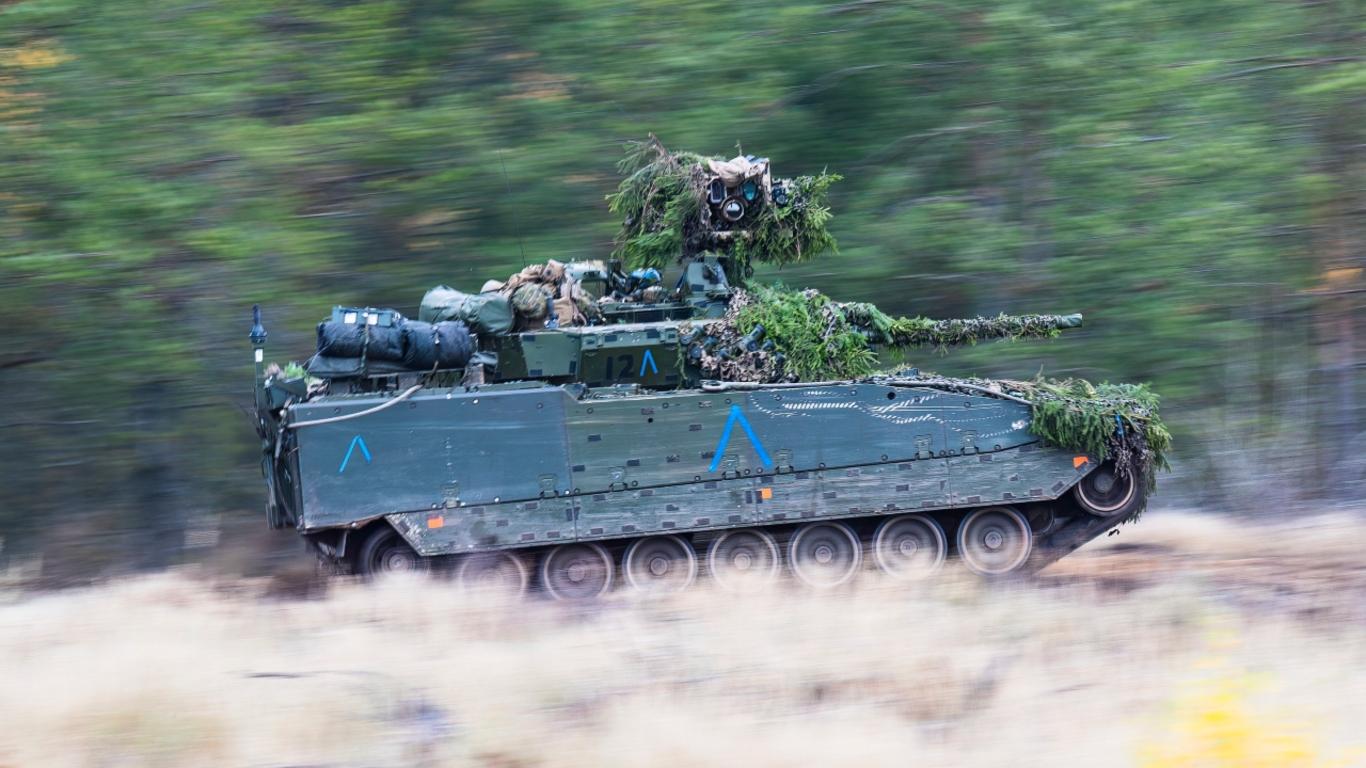
By contrast, at least nine European countries are equipping their armies with the CV90 infantry fighting vehicle from the British-Swedish firm BAE Systems Hägglunds. This also meets NATO standards, but costs only around €10 million per vehicle, not least because more than 1,000 units are being manufactured for many countries.
No less controversial is the equipping of the Bundeswehr’s 34,000 vehicles with a digital radio system from Rohde & Schwarz. What has long been in use elsewhere in Europe has been remanufactured in Germany by a domestic firm at a cost of more than €2 billion.
“What bothers me even more than the price is the fact that, at the moment, it isn’t working at all. So we’re spending a lot of money on things that don’t work,“ said Green MP Sebastian Schäfer, from his opposition seat in the Bundestag’s Budget Committee.
Governments are spending on defence at a scale not seen since World War II, however, in Europe’s race to rearm itself, doubts over cost efficiency and a lack of a collective procurement are mounting.
European NATO members plan to spend €1.2 trillion on weapons and equipment between 2025 and 2030, according to recent figures from the International Institute for Strategic Studies and data obtained from national governments by Investigate Europe. This unprecedented expenditure is equivalent to six years of the European Union’s budget.
Documents obtained from Germany’s Ministry of Defence, meanwhile, show that it alone plans to spend €397 billion on rearmament, to create what Chancellor Friedrich Merz has called Europe’s “strongest conventional army”. His stance reflects the domestic-first approach found throughout the continent.
Currently there exists no thorough common EU policy for defence spending and every government prioritising national sovereignty, pursuing rearmament on its own terms.
After nine months of reporting across 10 countries, analysis of procurement data and interviews with dozens of military, political and defence experts, Investigate Europe reveals the extent of Europe’s fragmented rearmament strategy.
“Each government orders relatively small quantities from individual suppliers, who are typically national suppliers, and therefore the price per unit is actually very high,” said Guntram Wolff, an economist at the Bruegel think tank. “So yes, we are spending too much for what we get in the end, and that is partly a result of market fragmentation.”
European militaries are known to operate 178 different weapons systems, the US Armed Forces manage just 30. The European Parliament’s Research Service has estimated that governments “lost and continue to lose an estimated 44 cents for every euro invested in defence equipment due to the lack of an integrated, European approach”.
Take, for example, in Germany, where the purchase of 200 new Puma Infantry fighting vehicles from domestic arms giant Rheinmetall and KNDS, are set to cost the state €4.2 billion – roughly €20 million each.
By contrast, at least nine European countries are equipping their armies with the CV90 infantry fighting vehicle from the British-Swedish firm BAE Systems Hägglunds. This also meets NATO standards, but costs only around €10 million per vehicle, not least because more than 1,000 units are being manufactured for many countries.
No less controversial is the equipping of the Bundeswehr’s 34,000 vehicles with a digital radio system from Rohde & Schwarz. What has long been in use elsewhere in Europe has been remanufactured in Germany by a domestic firm at a cost of more than €2 billion.
“What bothers me even more than the price is the fact that, at the moment, it isn’t working at all. So we’re spending a lot of money on things that don’t work,“ said Green MP Sebastian Schäfer, from his opposition seat in the Bundestag’s Budget Committee.
Spending inefficiencies span Europe
Other big countries follow the same national logic. In Italy, defence spending is rising massively, but the procurement of new weapons is handled almost solely at national level, and most contracts go to domestic companies such as Leonardo.
Despite the state’s excessive debt, which was 138 per cent of GDP in March 2026, the Meloni government agreed to increase military spending from €45 billion to €61 billion over the next two years.
Particularly costly is the planned construction of new battle tanks and armoured vehicles, the Panther KF51 and the Lynx KF41. Leonardo is developing the €20 billion project in collaboration with Rheinmetall. At the same time, Franco-German manufacturer KNDS is pursuing a very similar project.
Bruno Marton, a senator for the opposition Five Star Movement who approves funding requests the government makes to Parliament, is blunt in his assessment of the spending.
“We’re the government’s cash machine. It makes no sense to produce all these tanks in a country bordered by the Alps to the north and the sea on all sides,” Marton said. “We are now signing contracts decided back in 2023. Will they still be used, while the Ukrainian war has completely changed?”
Italy had had the chance to join the KNDS-led tank project, but was “only offered terms as a licensor, a position that cannot be regarded as advantageous and beneficial for the country”, Pietro Serino, Chief of the Italian Army until 2024, told Investigate Europe.
“Under the new Leonardo-Rheinmetall agreement, there will instead be a 50:50 split. It is an advantageous agreement for Rheinmetall, for Leonardo and, above all, for the Italian Army,” he added.
And that is exactly how it works in France too. The French state has always managed arms production in-house and has shares in the major corporations Thales and Safran. Consequently, the French army only purchases from abroad in exceptional cases.
Emmanuel Chiva, head of the French Defence Procurement Agency (DGA) between 2018 and 2022, is clear in how France’s military elite envisages European cooperation.
“We can produce everything, but given the state of our international relations and exchanges today, we find ourselves in a situation where we sometimes have to say: ‘France is leading the way on this or that weapons system – come with us, we’ll take you along’.”
A CV90 vehicle developed by the British-Swedish firm BAE Systems Hägglunds.Credit: Shutterstock
Fighter jets go head-to-head
This prioritisation of national interests was acutely apparent when France and Germany sought to join forces to build a next-generation fighter jet.
The FCAS initiative launched a decade ago to much fanfare from Angela Merkel and Emmanuel Macron. However, it was never completed, largely because France’s Dassault did not want to share leadership with the Franco-German-Spanish Airbus.
Last summer Chancellor Friedrich Merz announced the end of the FCAS project. It is reported to have cost the German government €1 billion and double that for the French.
French senator Hélène Conway-Mourais said the alliance was like “a forced marriage. When you force two people who don’t trust each other – who’ve always, let’s say, been at odds with each other – it’s very complicated."
Italy, meanwhile, is trying to develop a similar project, this time in alliance with the UK and Japan, to build a sixth-generation fighter jet, the GCAP (Global Combat Air Programme). It will be stealthy like the American F-35, but this time managed via a cloud computing network capable of communicating in real time with all weapon systems.
However, putting such a system into orbit costs at least €100 billion, even before finding any buyer. Italy has increased this year the development phase budget from the €6 billion originally planned to €19 billion, to be spent over the next nine years, whilst it is still subject to the excessive deficit procedure by the EU.
National interests
The European Commission’s plan for a collective defence strategy, the Defence Readiness Roadmap, was approved last year by all governments. Yet this has had almost no practical consequences: a mere 10 per cent of all defence spending is channelled through the EU, with everything else still managed through national initiatives.
Federico Santopinto, Research Director at Iris, a network of independently-owned research institutes, has a simple conclusion on why governments at home do the opposite of what they promise in Brussels.
“Intellectually they understand that the only way to assert European sovereignty is to work at the EU level through integration. On the other hand, they don’t want to lose power; they want to fund their own industry because this is a purely national vision.”
— Federico Santopinto
The Commission has launched a €150 billion loan programme, called SAFE, to finance defence spending. As everyone is jointly liable, this saves highly indebted governments billions in interest. In return, they should spend the money on joint European procurement.
“It’s very good progress,” Commissioner for Defense Andrius Kubilius told Investigate Europe. “We had 19 countries that signed up for this and applied for a loan. Two-thirds of the investment plans are based on joint procurement.”
However, SAFE comes with a notable loophole. The programme states that all contracts signed before June 2026 can use loans to fund their national shopping lists as well as for weapons purchases from US companies. When asked, Commissioner Kubilius simply said: “That was the way to achieve what we might call a compromise.”
Santopinto is sceptical about the merits of the initiative. “SAFE will do the opposite of what it should do, it will exacerbate the fragmentation of the defence industry and the European defence market instead of Europeanising it.”
A more positive assessment comes from Alessandro Marrone, who covers defence at Rome’s International Affairs Institute. “With the next EU budget (2028-2034) things will change. First there will be a lot of money, at least €131 billion to share between space and defense. Then the Commission will say to governments: ‘you do projects jointly and I provide co-financing, which is substantial, not marginal’”.
“It’s very good progress,” Commissioner for Defense Andrius Kubilius told Investigate Europe. “We had 19 countries that signed up for this and applied for a loan. Two-thirds of the investment plans are based on joint procurement.”
However, SAFE comes with a notable loophole. The programme states that all contracts signed before June 2026 can use loans to fund their national shopping lists as well as for weapons purchases from US companies. When asked, Commissioner Kubilius simply said: “That was the way to achieve what we might call a compromise.”
Santopinto is sceptical about the merits of the initiative. “SAFE will do the opposite of what it should do, it will exacerbate the fragmentation of the defence industry and the European defence market instead of Europeanising it.”
A more positive assessment comes from Alessandro Marrone, who covers defence at Rome’s International Affairs Institute. “With the next EU budget (2028-2034) things will change. First there will be a lot of money, at least €131 billion to share between space and defense. Then the Commission will say to governments: ‘you do projects jointly and I provide co-financing, which is substantial, not marginal’”.
The development of military drones and other technologies is changing procurement approaches.Credit: Shutterstock
The Ukraine lesson
Fragmented spending is not the only concern, so too is the incompatibility of weapon systems. As Ukraine’s armed forces discovered to their cost when they received countless rounds of ammunition, tanks and other equipment that were not compatible with one another.
Ukraine’s Deputy Head of Logistic Command, General Andrii Sliusart, told Investigate Europe in Kyiv that managing such disparate systems is a major challenge.
“We have around 300 different types of armoured vehicles alone and this represents a very heavy burden on logistics, because all these vehicles must be kept constantly ready for action; they require regular maintenance and, accordingly, must be supplied with repairs and spare parts.”
The result is a “technological zoo”, according to Sliusart. “The Caesar (guns), for example, fires only ammunition intended for the Caesar, whilst the German Panzerhaubitze 2000 fires only ammunition intended for the Panzerhaubitze,” he explained.
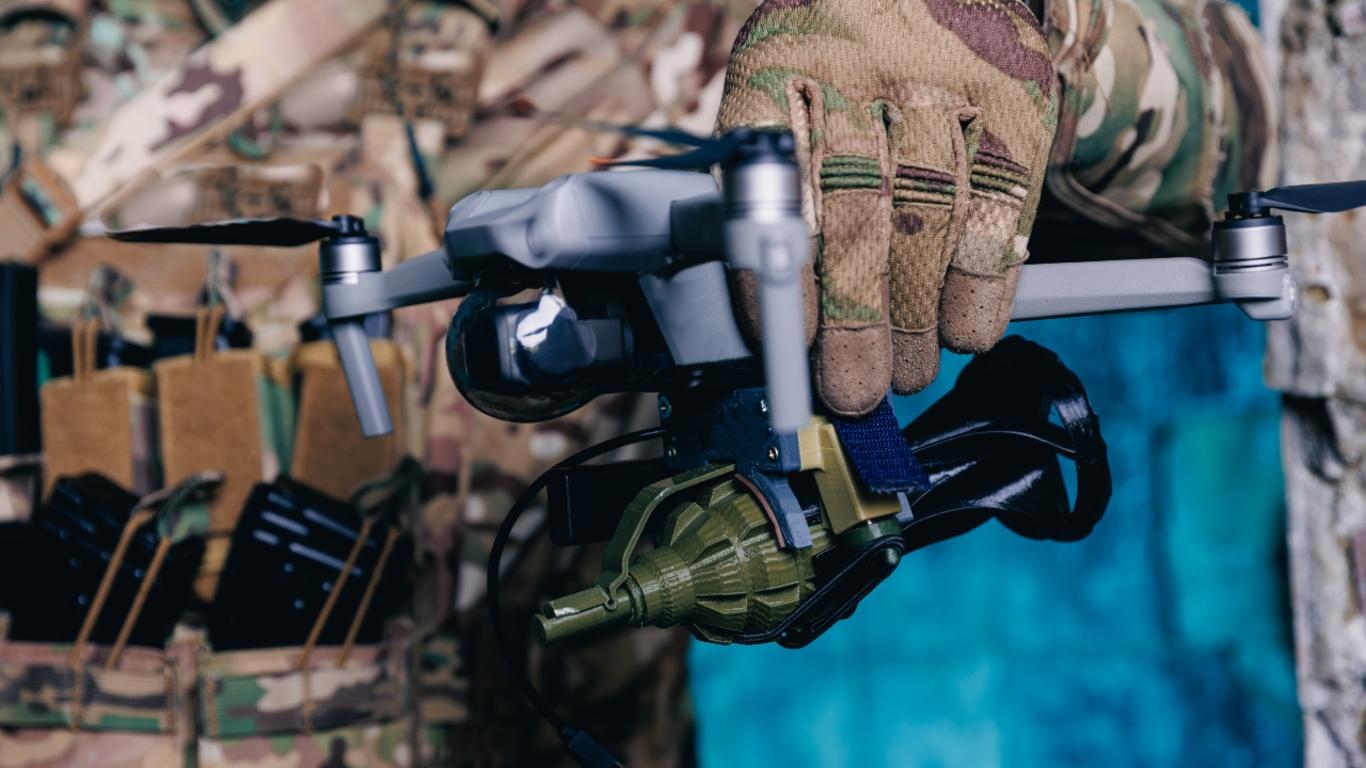
Oleksii Reznikov, Minister of Defence in the early years of the war, said that the changing nature of warfare, from conventional tanks and artillery, to one of robotic systems and flying drones, which are often much cheaper, is bringing new procurement challenges.
“Today, two FPV drones costing $500 each can destroy a tank worth $12 million,” Reznikov said of the Ukraine conflict. “That's bad news for big corporations. Because now start-ups, drone manufacturers, electronic warfare systems build things in garages. Aircraft carriers are becoming increasingly irrelevant”.
The question is when our governments will manage to break free from their national industries in order to truly produce the weapons of the future.
In Madrid, Spain’s Foreign Affairs Minister, José Manuel Albares, is clear about how Europe should approach its future defence needs. “There are two steps that seem obvious and very straightforward to me: the integration of defence industries… and building a common security cooperation. It is not necessary for all 27 to be involved; those of us who are most determined should move forward with it. Around 200,000 soldiers would be necessary to provide under a single European command.”
Additional reporting: Leila Minano, Paulo Pena, Begonia Ramirez and Iryna Shev.
This story is part of Rearming Europe, a cross-border investigation by Investigate Europe in collaboration with ARTE and RTP, and published with media partners including Il Fatto Quotidiano and Público.