Rearming Europe
Europe is in an arms race. But as governments rush to build out defence systems amid deepening global threats, what is the true cost of the continent’s fragmented military spending?
September 2026
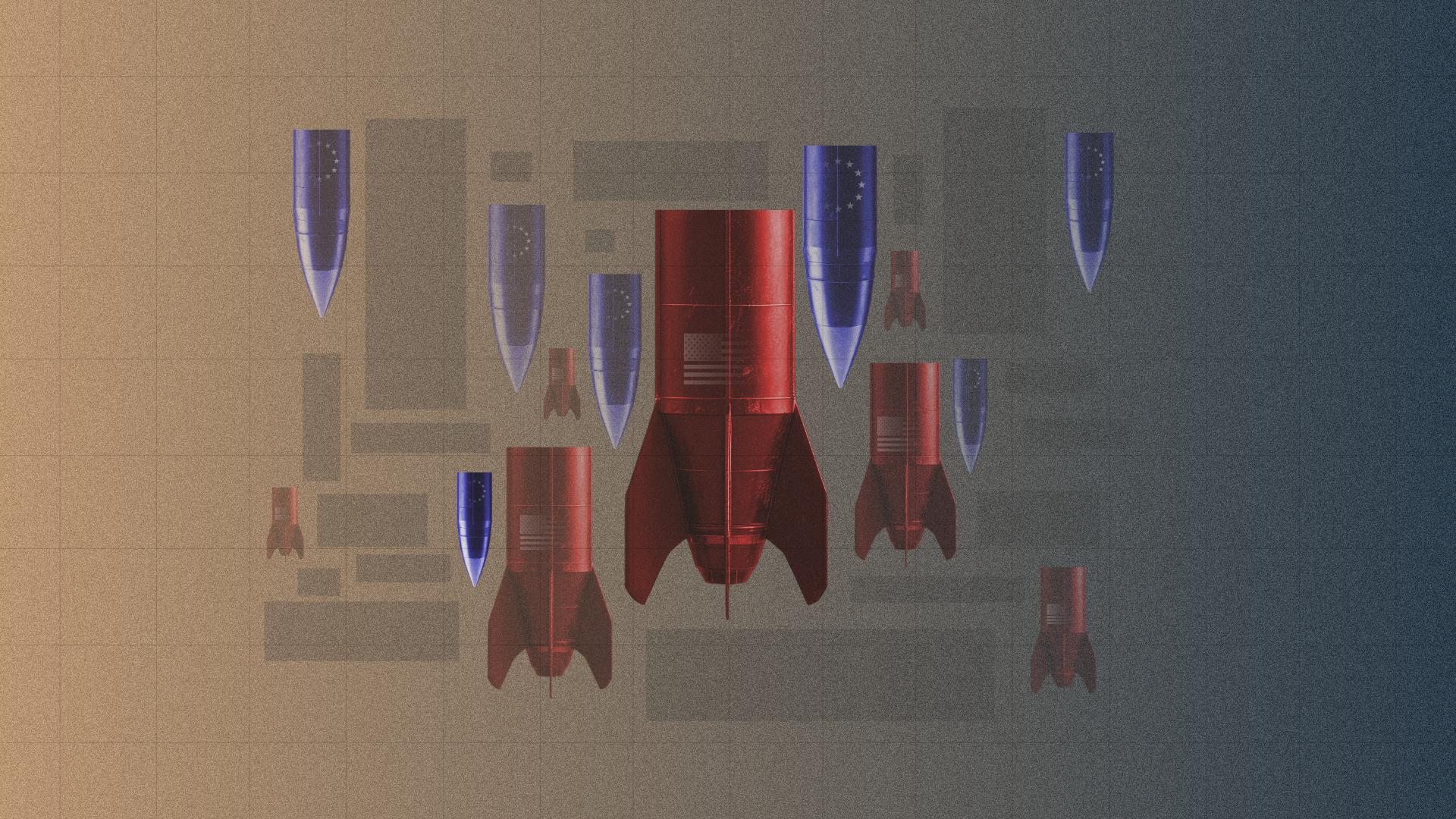
Europe spends more on defence than China. Yet its armies operate around 178 different major weapons systems, while the United States runs about 30. European forces field 17 types of main battle tank; the Americans use one. Each duplication has a price: smaller orders, higher unit costs, ammunition that fits only one gun, repairs that wait on a factory in another country.
Over the coming years, European governments will spend unprecedented sums on rearmament. Our investigation asks a simple question: is that money buying security, or deepening the fragmentation that already costs Europe dearly?
We followed the money and the equipment. In Ukraine, where Western weapons are tested in real combat, we saw what a "technological zoo" means in wartime: some 300 types of armoured vehicle, spare parts that never arrive, and systems sent back to foreign manufacturers because of intellectual property restrictions.
In Brussels, we examined SAFE, the EU's €150 billion defence loan programme, designed to encourage joint purchasing. According to analysts, around a third of the loans went to purely national acquisitions. Across the continent, we traced a deep dependence: Europeans buy around 40 per cent of their military equipment from the United States, which buys barely 1 per cent from Europe.
We spoke to a former Ukrainian defence minister, NATO commanders, European lawmakers and industry leaders. Their accounts don't always agree, but together they show a continent rearming at speed but running the high risk that it buys the wrong weapons from unreliable producers for high prices without gaining security.
Rearm Europe is an investigation led and coordinated by Investigate Europe, It is being published with media partners around Europe including Arte, RTP, Il Fatto Quotidiano.
The documentary is already available on Arte's website in both German and French.
Over the coming years, European governments will spend unprecedented sums on rearmament. Our investigation asks a simple question: is that money buying security, or deepening the fragmentation that already costs Europe dearly?
We followed the money and the equipment. In Ukraine, where Western weapons are tested in real combat, we saw what a "technological zoo" means in wartime: some 300 types of armoured vehicle, spare parts that never arrive, and systems sent back to foreign manufacturers because of intellectual property restrictions.
In Brussels, we examined SAFE, the EU's €150 billion defence loan programme, designed to encourage joint purchasing. According to analysts, around a third of the loans went to purely national acquisitions. Across the continent, we traced a deep dependence: Europeans buy around 40 per cent of their military equipment from the United States, which buys barely 1 per cent from Europe.
We spoke to a former Ukrainian defence minister, NATO commanders, European lawmakers and industry leaders. Their accounts don't always agree, but together they show a continent rearming at speed but running the high risk that it buys the wrong weapons from unreliable producers for high prices without gaining security.
Rearm Europe is an investigation led and coordinated by Investigate Europe, It is being published with media partners around Europe including Arte, RTP, Il Fatto Quotidiano.
The documentary is already available on Arte's website in both German and French.




Help bringour cross-border journalism to life.Support Investigate EuropeDonate
Publications

Ευρωπαϊκή άμυνα: Το πιο σύντομο αμερικάνικο ανέκδοτο
Reporters United, Greece
1 October 2026

Ognuno spende per sé: così i Paesi Ue buttano 44 centesimi ogni euro
Il Fatto Quotidiano, Italy
28 September 2026

Viel Geld, wenig Sicherheit? Europa rüstet auf
Arte, France/Germany/Spain
22 September 2026
Armement europeen - des milliards pour quoi faire?
Arte, France/Germany/Spain
22 September 2026