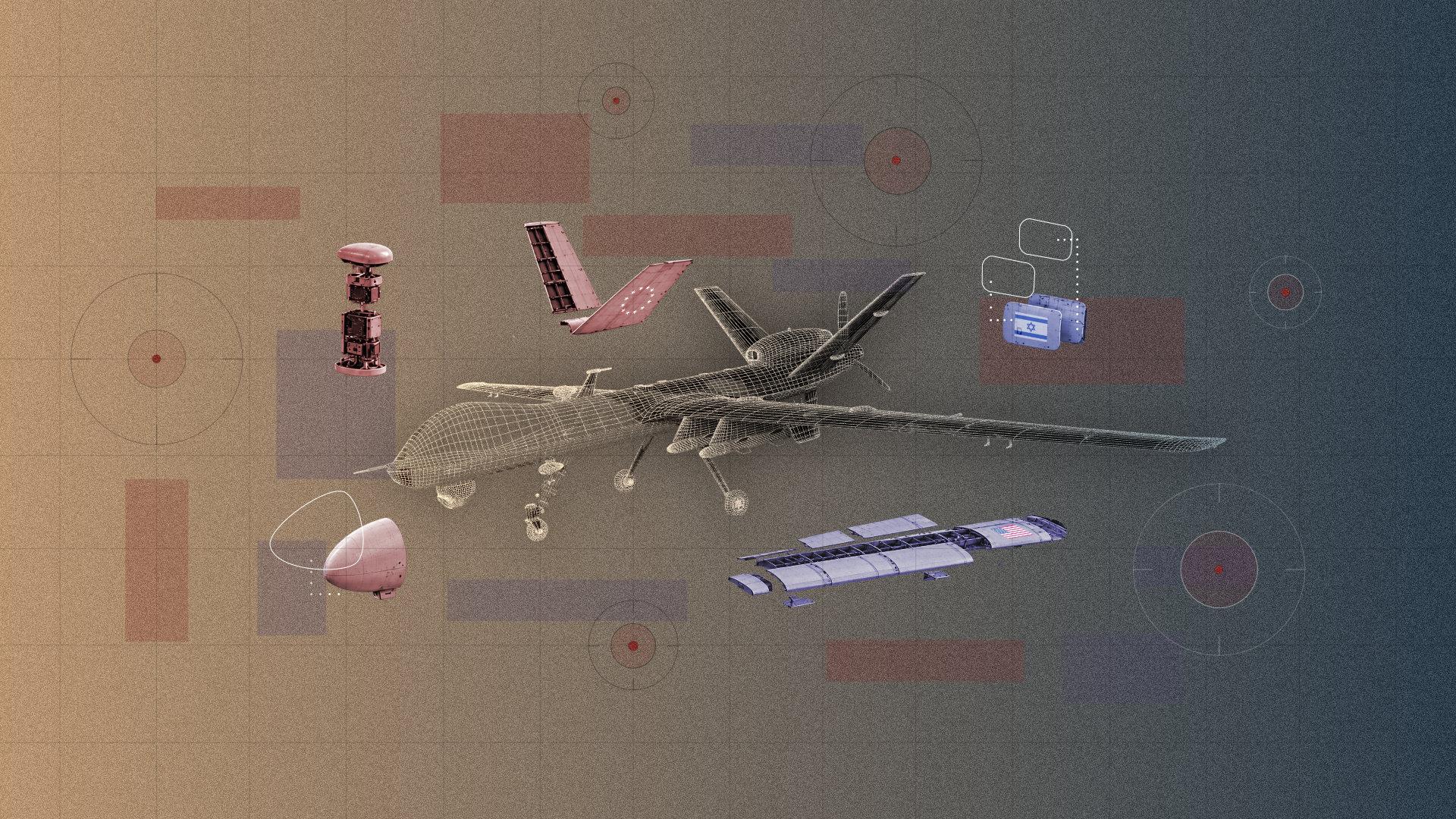
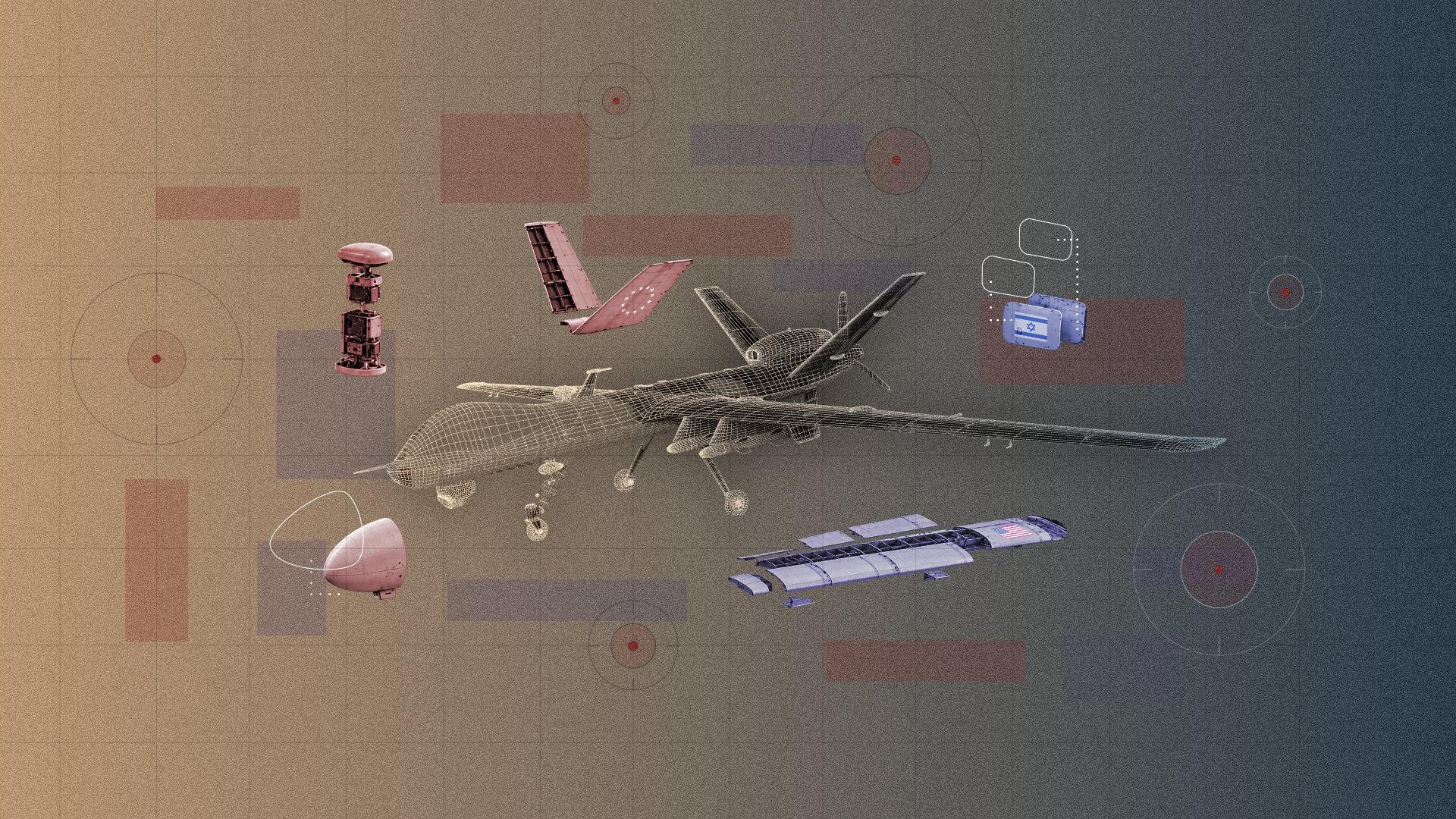
Europe’s dependency on foreign-made arms is here to stay
Credit: Spoovio


Despite the huge sums mobilised for defence, dependency on the US remains highly entrenched for air defence in particular, while a new reliance on Israel is emerging.
In 2011, when the Italians, French and British launched an intervention in Libya, they promptly ran out of air-to-ground missiles. Within two days, the US had to step in. A decade later in 2021, it was US forces who brought some semblance of order at Kabul airport during NATO's chaotic Afghan withdrawal.
Few would contest that at moments of genuine stress, European military power depends on American logistics, munitions, intelligence and will. The Russian invasion of Ukraine in 2022 was supposed to be a line in the sand. Europeans pledged to build “strategic autonomy” - largely by spending more on arms and beefing up production.
Four years on, governments are spending enormous sums, and manufacturing has boomed. But European Union countries importing military equipment – like arms, tanks, aircraft, warships and explosives – source less than half from within the bloc, while a third comes supplied by the US.
Public money still flows back to American suppliers, entrenching a dependency governments vowed to reform in face of an increasingly volatile, at times openly hostile, Washington.
The EU is also quietly developing new dependencies elsewhere, most notably in Israel, despite its prime minister facing an international arrest warrant for war crimes in Gaza.
Moreover, overall import shares tell only part of the story. In the key field of air defence, Europe appears highly dependent on the US and Israel, Investigate Europe found in an exclusive analysis of procurement data from the International Institute for Strategic Studies (IISS).
The dangers of these dependencies, from supply problems to political implications, are not theoretical. From Ukraine to the Middle East, they are already visible on the battlefield.
By any measure, the scale of Europe's rearmament since 2020 is staggering. According to the Stockholm International Peace Research Institute (SIPRI), European NATO countries arms imports increased almost 150 per cent between 2020 and 2025, compared to the previous five years.
Data gathered by the IISS and analysed by Investigate Europe showed total expenditure on major arms contracts across European NATO members reached $366.7 billion between January 2020 and December 2025.
Of the 330 recorded purchases, more than 50 came directly from the US and were worth a combined $111 billion - almost a third of the value of all orders placed. Germany and Poland alone spent over $70 billion on orders from the US or involving US companies.
Few would contest that at moments of genuine stress, European military power depends on American logistics, munitions, intelligence and will. The Russian invasion of Ukraine in 2022 was supposed to be a line in the sand. Europeans pledged to build “strategic autonomy” - largely by spending more on arms and beefing up production.
Four years on, governments are spending enormous sums, and manufacturing has boomed. But European Union countries importing military equipment – like arms, tanks, aircraft, warships and explosives – source less than half from within the bloc, while a third comes supplied by the US.
Public money still flows back to American suppliers, entrenching a dependency governments vowed to reform in face of an increasingly volatile, at times openly hostile, Washington.
The EU is also quietly developing new dependencies elsewhere, most notably in Israel, despite its prime minister facing an international arrest warrant for war crimes in Gaza.
Moreover, overall import shares tell only part of the story. In the key field of air defence, Europe appears highly dependent on the US and Israel, Investigate Europe found in an exclusive analysis of procurement data from the International Institute for Strategic Studies (IISS).
The dangers of these dependencies, from supply problems to political implications, are not theoretical. From Ukraine to the Middle East, they are already visible on the battlefield.
By any measure, the scale of Europe's rearmament since 2020 is staggering. According to the Stockholm International Peace Research Institute (SIPRI), European NATO countries arms imports increased almost 150 per cent between 2020 and 2025, compared to the previous five years.
Data gathered by the IISS and analysed by Investigate Europe showed total expenditure on major arms contracts across European NATO members reached $366.7 billion between January 2020 and December 2025.
Of the 330 recorded purchases, more than 50 came directly from the US and were worth a combined $111 billion - almost a third of the value of all orders placed. Germany and Poland alone spent over $70 billion on orders from the US or involving US companies.
In some key sectors, dominance is particularly stark. Investigate Europe reviewed around 30 major air and missile defence deals announced by European countries since 2022 to the present day.
Of the 10 biggest in value, eight were inked with companies from either the US or Israel; the two others involved Polish company PGZ and the UK branch of European supplier MBDA. Purely European projects are comparatively rare and mostly remain at the level of declared intentions.
Buying American is not just a financial transaction; it is long-term lock-in. Buyers commit to a 20 to 30 year ecosystem of American maintenance, software updates, and training.
“Europeans don't have the production capacity and the technology [for air and missile defence], there are just no European alternatives when you factor in the urgency, the price and the availability,” said Pieter Wezeman, a researcher from the SIPRI. “This just forces European states to look at US and Israeli alternatives.”
Early last year, European media were rife with speculation about whether the US had embedded a “kill switch” into Lockheed Martin F35 fighter jets to deactivate its functions.
As it turns out, Washington wouldn’t need to go so far. At any time, the US could exercise its discretion over intelligence sharing, resupply of parts, software updates, and maintenance.
When the Trump administration halted intelligence support and delivery of certain missiles to Ukraine in mid-2025, the question stopped being theoretical.
NATO states face exactly the same risks. Despite this, in January Germany ordered €1.5 billion worth of eight sea drones that run purely on American software. If that software is not updated, those drones become, according to Guntram Wolff of the Bruegel Institute, "basically useless."
Europe is also increasingly buying US weapons purchased through the Department of Defense’s Foreign Military Sales programme, worth some $43 billion dollars in 2024, according to a report from France’s Foundation for Strategic Research. The terms and conditions give the US government the right to withdraw from maintenance and support contracts without consequences.
Germany’s multi-billion F35 agreement with the US government gives even Washington the right to suspend the provision of services, German media reported in September citing a copy of the contract itself.
One high-placed source in the US defence industry told Investigate Europe on condition of anonymity that Washington could theoretically block the use of already-sold systems to achieve its political goals under the Foreign Military Sales programme. The option is unlikely to be used, however, they explained: “I don't think they want to destroy our market."
Of the 10 biggest in value, eight were inked with companies from either the US or Israel; the two others involved Polish company PGZ and the UK branch of European supplier MBDA. Purely European projects are comparatively rare and mostly remain at the level of declared intentions.
Buying American is not just a financial transaction; it is long-term lock-in. Buyers commit to a 20 to 30 year ecosystem of American maintenance, software updates, and training.
“Europeans don't have the production capacity and the technology [for air and missile defence], there are just no European alternatives when you factor in the urgency, the price and the availability,” said Pieter Wezeman, a researcher from the SIPRI. “This just forces European states to look at US and Israeli alternatives.”
Washington in driver’s seat
Early last year, European media were rife with speculation about whether the US had embedded a “kill switch” into Lockheed Martin F35 fighter jets to deactivate its functions.
As it turns out, Washington wouldn’t need to go so far. At any time, the US could exercise its discretion over intelligence sharing, resupply of parts, software updates, and maintenance.
When the Trump administration halted intelligence support and delivery of certain missiles to Ukraine in mid-2025, the question stopped being theoretical.
NATO states face exactly the same risks. Despite this, in January Germany ordered €1.5 billion worth of eight sea drones that run purely on American software. If that software is not updated, those drones become, according to Guntram Wolff of the Bruegel Institute, "basically useless."
Europe is also increasingly buying US weapons purchased through the Department of Defense’s Foreign Military Sales programme, worth some $43 billion dollars in 2024, according to a report from France’s Foundation for Strategic Research. The terms and conditions give the US government the right to withdraw from maintenance and support contracts without consequences.
Germany’s multi-billion F35 agreement with the US government gives even Washington the right to suspend the provision of services, German media reported in September citing a copy of the contract itself.
One high-placed source in the US defence industry told Investigate Europe on condition of anonymity that Washington could theoretically block the use of already-sold systems to achieve its political goals under the Foreign Military Sales programme. The option is unlikely to be used, however, they explained: “I don't think they want to destroy our market."
Even when European states do manage to buy closer to home, it is hard to totally break free of US involvement. When Bulgaria bought naval missiles for use in the Black Sea, the purchase sounded European – the weapon was developed by Kongsberg, a Norwegian state firm. But the missiles still use technology by US contractor Raytheon in a government-to-government procurement deal between Washington and Sofia.
Still, experts see this kind of joint production as the only hope of Europe someday developing its own defense capabilities.
“Building up capacity, production lines, getting familiar with the technology may in the long run contribute to more European self-sufficiency,” SIPRI’s Wezeman said. “Countries have built their own arms industry by importing production lines and tech from abroad. An example is China.”
Doing so may have become even more urgent. For decades, European NATO members have treated American air defence materiel as a backstop – available on request, deployable within days. The recent track record in Ukraine and the Middle East have shattered that assumption.
In just 12 days in June 2025, the US reportedly used around 150 THAAD missile interceptors – its most advanced upper-tier missile defence system - to help Israel wage war with Iran. Arms giant Lockheed Martin presently produces around 20 units per year; replacing that stockpile will take around eight years.
With THAAD batteries already committed to Israel and the UAE, as well as others competing for the same assets, European nations can no longer assume that American high-end interceptors will be available on demand in a concurrent crisis.
Still, experts see this kind of joint production as the only hope of Europe someday developing its own defense capabilities.
“Building up capacity, production lines, getting familiar with the technology may in the long run contribute to more European self-sufficiency,” SIPRI’s Wezeman said. “Countries have built their own arms industry by importing production lines and tech from abroad. An example is China.”
Doing so may have become even more urgent. For decades, European NATO members have treated American air defence materiel as a backstop – available on request, deployable within days. The recent track record in Ukraine and the Middle East have shattered that assumption.
In just 12 days in June 2025, the US reportedly used around 150 THAAD missile interceptors – its most advanced upper-tier missile defence system - to help Israel wage war with Iran. Arms giant Lockheed Martin presently produces around 20 units per year; replacing that stockpile will take around eight years.
With THAAD batteries already committed to Israel and the UAE, as well as others competing for the same assets, European nations can no longer assume that American high-end interceptors will be available on demand in a concurrent crisis.
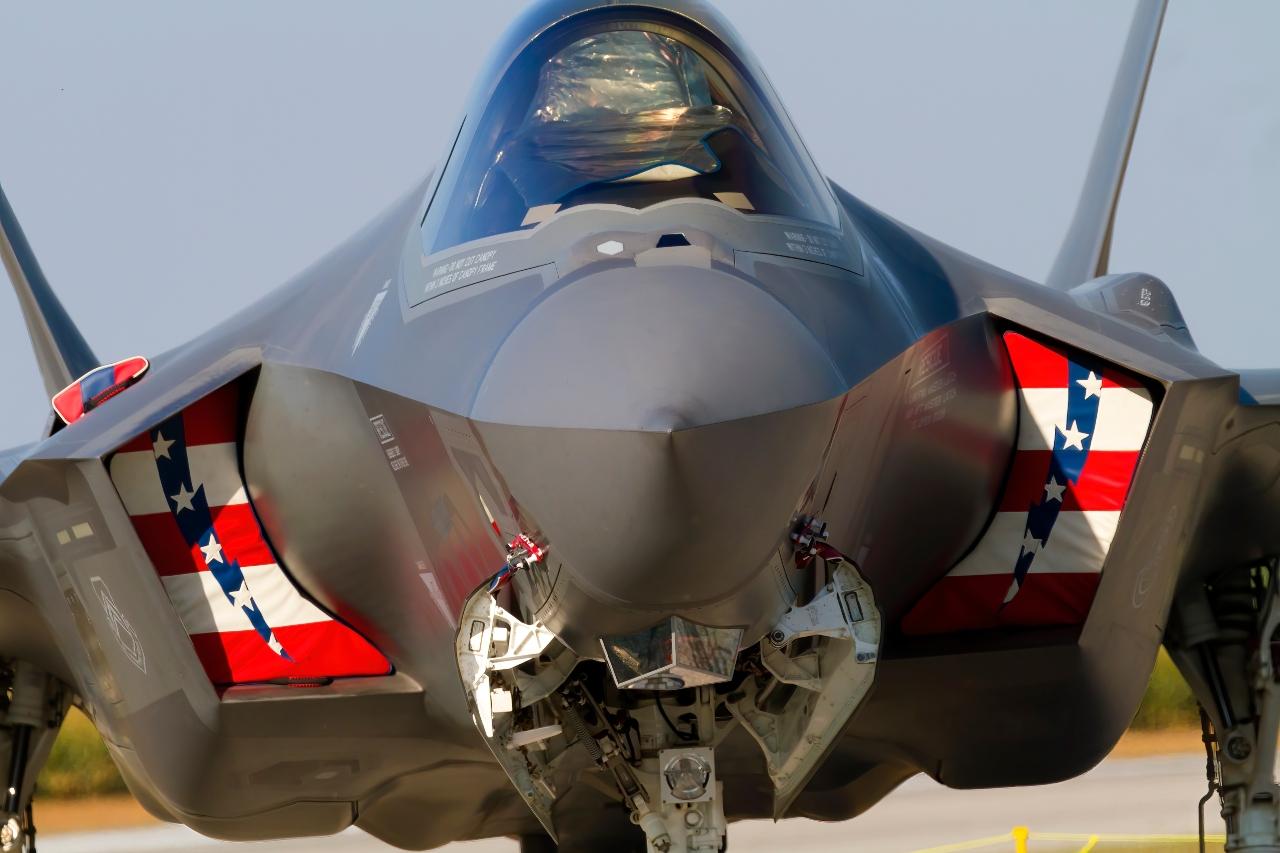
The Lockhead Martin F35 fighter jet is is popular among European governments.Credit: Shutterstock
Israel dependency
The US is not the only foreign power European states rely upon for arms. Between 2020 and 2025, Israel accounted for 7.7 per cent of European NATO arms imports, almost doubling its share from the previous five years, according to data from SIPRI.
Sales to Europe made up 36 per cent of Israel’s global weapons exports in 2025. Greece has just agreed to purchase €3 billion for Israeli multi-layered air defense systems in the biggest export deal in Israeli history. Germany, Finland, Serbia, Slovakia, Romania and Cyprus have also been buying large quantities of Israeli weapons.
Israeli systems, particularly missile defence, serve crucial functions. They reportedly help protect the jet of French president Emmanuel Macron, while the spy planes bought by Italy are Israeli. The Israeli made Advanced Protection Systems fitted in tanks all over Europe may be a small part of the value of the whole tank, but their role is key.
This deepening business relationship has political implications, not least when it comes to Europe’s appetite to criticize Israel’s campaign in Gaza, where it stands accused of (and denies) genocide at the International Court of Justice.
On various occasions, Israeli officials have described how European interest in Israeli weapons is helping sideline uncomfortable discussions and how it prevents momentum on sanctions against Israel from taking off.
In Finland, recent acquisitions have sparked debate, according to Kari Paasonen, researcher at the Tampere Peace Research Institute, told Investigate Europe. “One question is whether this dependency restricts how Finland can criticize Israel.”
Last year, one of the EU’s most staunchly pro-Palestianian countries, Spain, passed a decree banning weapons imports from Israel. But experts say only two of the many existing contracts have been cancelled. The Spanish government has not clarified whether the amendments to the remaining contracts entail buying weapons jointly produced by Israeli companies with European partners on European soil.
The EU could also be weaning itself off American arms only to fall into a new trap, according to Rob de Wijk of the Hague Center for Strategic Studies.“Israeli weapons create similar dependencies for Europe as US weapons,” he said. “We just haven't studied this yet.”
In government-to-government deals, the country providing the weapons has an effective veto on their use and also gains political leverage over the buyer state.
Four years ago, the Israeli defence ministry reportedly made use of this “end-user restriction” preventing the three Baltic states from sending their Israeli anti-tank missiles to Ukraine.
Former Greek Vice Defence Minister Nikos Toskas told Investigate Europe it was possible Israeli weapons manufacturers could gather valuable information about how buyers will use them, and effectively block their use by denying software updates or parts supplies.
Theoretically, shutting down weapons systems is even possible. “It is extremely difficult to know whether the manufacturer has kept a backdoor to control the systems”, Nikos Toskas, former Deputy Minister of Defence of Greece, told Investigate Europe.
Investigate Europe approached the Israeli ministry of Defense for comment but received no answer by the time of publication.
While US dependency is hard to kick, Europe is now politically willing to acknowledge the problem. The EU has rolled out a range of initiatives, including €7 billion through the European Defence Fund and SAFE, a €150-billion low-cost loan programme, to encourage joint procurement, research and purchases closer to home. It has also begun embedding "buy European" requirements into both.
Successive US administrations urged European NATO allies to spend more on defence, but always within the US-led ecosystem. Joe Biden's NATO ambassador voiced concerns about European rearmament with European arms as early as 2024. The Trump administration's National Defense Strategy of November 2025 made the position explicit: European rearmament should fit within US global defence strategy and strengthen the US military industrial base.
To work around the new procurement rules, US defence firms are creating legal firewalls between their US and EU operations so that EU-based subsidiaries qualify as European, according to the well-placed industry source. "If we fulfil the criteria set out for a firm to be considered European, then we are European.
In government-to-government deals, the country providing the weapons has an effective veto on their use and also gains political leverage over the buyer state.
Four years ago, the Israeli defence ministry reportedly made use of this “end-user restriction” preventing the three Baltic states from sending their Israeli anti-tank missiles to Ukraine.
Former Greek Vice Defence Minister Nikos Toskas told Investigate Europe it was possible Israeli weapons manufacturers could gather valuable information about how buyers will use them, and effectively block their use by denying software updates or parts supplies.
Theoretically, shutting down weapons systems is even possible. “It is extremely difficult to know whether the manufacturer has kept a backdoor to control the systems”, Nikos Toskas, former Deputy Minister of Defence of Greece, told Investigate Europe.
Investigate Europe approached the Israeli ministry of Defense for comment but received no answer by the time of publication.
European declarations collide with US intentions
While US dependency is hard to kick, Europe is now politically willing to acknowledge the problem. The EU has rolled out a range of initiatives, including €7 billion through the European Defence Fund and SAFE, a €150-billion low-cost loan programme, to encourage joint procurement, research and purchases closer to home. It has also begun embedding "buy European" requirements into both.
Successive US administrations urged European NATO allies to spend more on defence, but always within the US-led ecosystem. Joe Biden's NATO ambassador voiced concerns about European rearmament with European arms as early as 2024. The Trump administration's National Defense Strategy of November 2025 made the position explicit: European rearmament should fit within US global defence strategy and strengthen the US military industrial base.
To work around the new procurement rules, US defence firms are creating legal firewalls between their US and EU operations so that EU-based subsidiaries qualify as European, according to the well-placed industry source. "If we fulfil the criteria set out for a firm to be considered European, then we are European.
Despite what they may claim to the public about a new era of strategic autonomy, European leaders frequently still end up following US rules. When the US temporarily halted arms shipments to Ukraine in mid-2025, European countries stepped in to buy weapons for Ukraine themselves, and had to buy them from the US.
In late April, President Trump announced the withdrawal of 5,000 troops from Germany and cancelled planned mid-range missile deployments. Less than two weeks later, Germany's defence minister announced an urgent trip to Washington to replace those missiles with new American ones, paid for by Germany.
Most analysts describe the path forward as neither a clean break from American systems nor the status quo, but a managed shift. That means honouring existing contracts and maintenance obligations on operational systems, sending every new procurement to European producers where a competitive alternative exists, and investing heavily where European capability is most critically absent: space, communications and air defence.
The question is not only whether European states may seek to shed some of their key dependencies, but whether the US will allow them to do so.
This story is part of Rearming Europe, a cross-border investigation by Investigate Europe in collaboration with ARTE and RTP, and published with media partners including Il Fatto Quotidiano, Público and Reporters United.
In late April, President Trump announced the withdrawal of 5,000 troops from Germany and cancelled planned mid-range missile deployments. Less than two weeks later, Germany's defence minister announced an urgent trip to Washington to replace those missiles with new American ones, paid for by Germany.
Most analysts describe the path forward as neither a clean break from American systems nor the status quo, but a managed shift. That means honouring existing contracts and maintenance obligations on operational systems, sending every new procurement to European producers where a competitive alternative exists, and investing heavily where European capability is most critically absent: space, communications and air defence.
The question is not only whether European states may seek to shed some of their key dependencies, but whether the US will allow them to do so.
This story is part of Rearming Europe, a cross-border investigation by Investigate Europe in collaboration with ARTE and RTP, and published with media partners including Il Fatto Quotidiano, Público and Reporters United.