Soft2bet Files: Global gambling network made €600 million from unlicensed casinos with ‘predatory’ tactics
Credit: Joanna Poupaki/Spoovio

A year-long investigation by Investigate Europe and media partners in 15 countries uncovers a vast network of black-market betting websites operating throughout the continent and beyond.
A major gambling company celebrated for its ethical practices has profited hundreds of millions from unlicensed online casinos found to be targeting vulnerable players around Europe.
A trove of leaked payment statements shared with Investigate Europe reveals how Soft2bet and its partners received €600 million from entities operating offshore casinos that regulators have blacklisted for illegal gambling.
The documents, which run to thousands of pages, show money flowing from the casinos via a network of shell companies and payment agents to Soft2bet.
Investigate Europe also obtained screenshots of internal conversations and files appearing to show that the group and its partners now operate 145 blacklisted websites from sprawling offices in Malta and Cyprus.
Among the websites is Onlyspins, a sex-themed casino targeting European customers that doesn't verify if users are over-18.
It is a far cry from the polished image Soft2bet has built with industry awards and prestigious sport sponsorships, and a business which publicly consists of 11 betting brands and software sales.
The year-long investigation, produced with media partners in 15 countries, found the casinos received millions of visits across Europe, despite being banned by regulators for not holding local licences.
A trove of leaked payment statements shared with Investigate Europe reveals how Soft2bet and its partners received €600 million from entities operating offshore casinos that regulators have blacklisted for illegal gambling.
The documents, which run to thousands of pages, show money flowing from the casinos via a network of shell companies and payment agents to Soft2bet.
Investigate Europe also obtained screenshots of internal conversations and files appearing to show that the group and its partners now operate 145 blacklisted websites from sprawling offices in Malta and Cyprus.
Among the websites is Onlyspins, a sex-themed casino targeting European customers that doesn't verify if users are over-18.
It is a far cry from the polished image Soft2bet has built with industry awards and prestigious sport sponsorships, and a business which publicly consists of 11 betting brands and software sales.
The year-long investigation, produced with media partners in 15 countries, found the casinos received millions of visits across Europe, despite being banned by regulators for not holding local licences.
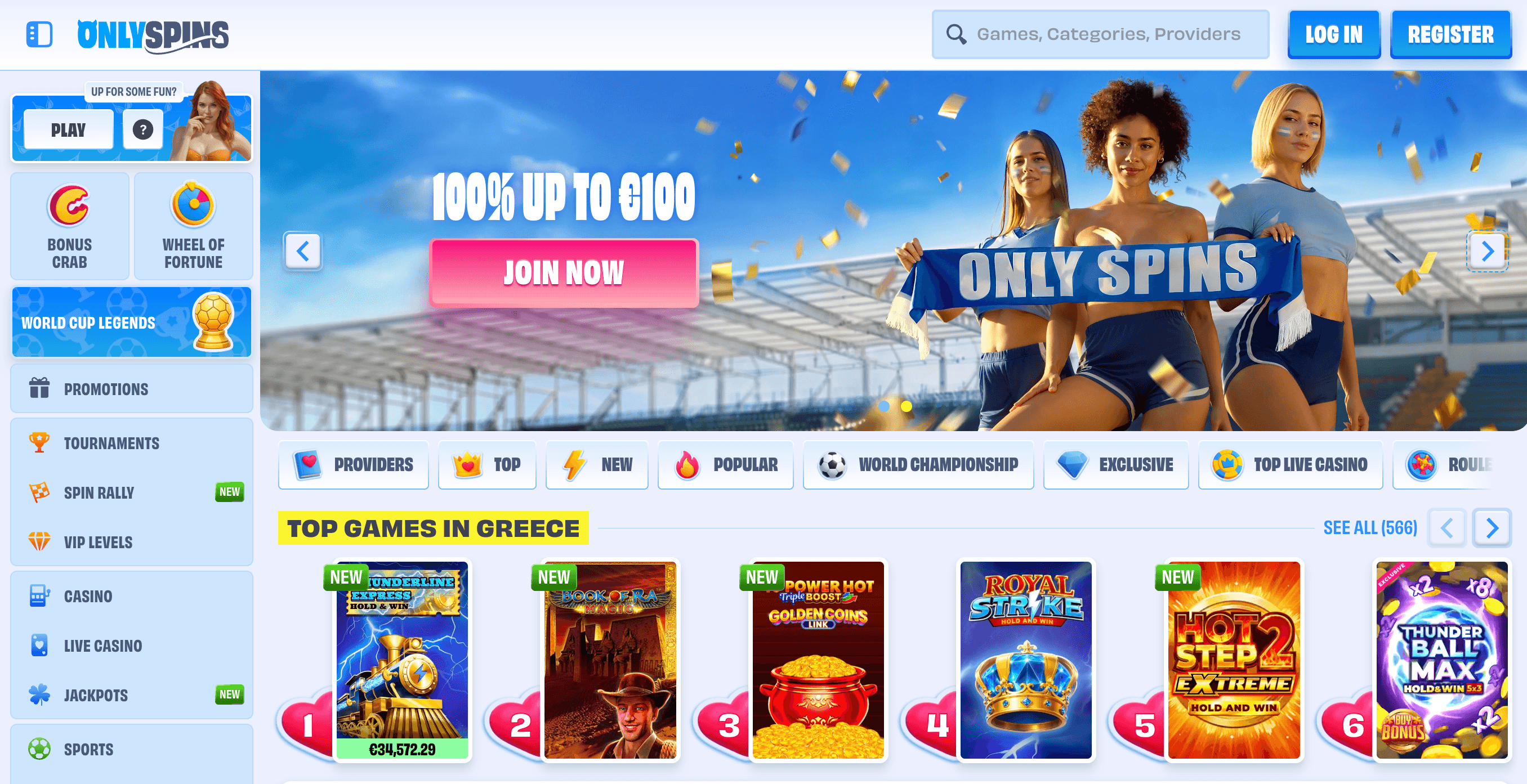
Onlyspins is among more than 100 casinos unlicensed in Europe found by the investigation to be connected to Soft2bet.
Investigate Europe also spoke to half a dozen people who have worked for Soft2bet. They claim that customer agents regularly delayed vulnerable users’ attempts to close their accounts and reactivated them after they had been shut. One former worker said they thought some of the casinos’ practices were “predatory”.
Rachel* spent £145,000 (€169,000) after customer agents ignored her requests to self-exclude from an unlicensed Soft2bet-linked casino in the UK. “I was so desperate and I felt so full of panic,” she told Investigate Europe. “It’s abuse of vulnerable people.”
Former workers with the company described to Investigate Europe a pressurised culture. Leaked messages from internal chat platforms suggest employees were asked to take lie detector tests by management.
It is an environment seemingly at odds with the public profile of Soft2bet and its charismatic founder Uri Poliavich, who also runs the Yael Foundation, a multi-million euro charity funding religious schools around the world.
“Uri Poliavich is a man of contradictions because on the one hand he shows himself like the Steve Jobs of i-gaming and a religious philanthropist, but then on the other, they are putting out brands that blend gambling and porn,” one former employee told Investigate Europe.
Sabine Verheyen, a Vice President of the European Parliament and critic of the sector, said that if confirmed, the findings are extremely worrying. She urged member states to cooperate more closely to clampdown on unlicensed operations.
Rachel* spent £145,000 (€169,000) after customer agents ignored her requests to self-exclude from an unlicensed Soft2bet-linked casino in the UK. “I was so desperate and I felt so full of panic,” she told Investigate Europe. “It’s abuse of vulnerable people.”
Former workers with the company described to Investigate Europe a pressurised culture. Leaked messages from internal chat platforms suggest employees were asked to take lie detector tests by management.
It is an environment seemingly at odds with the public profile of Soft2bet and its charismatic founder Uri Poliavich, who also runs the Yael Foundation, a multi-million euro charity funding religious schools around the world.
“Uri Poliavich is a man of contradictions because on the one hand he shows himself like the Steve Jobs of i-gaming and a religious philanthropist, but then on the other, they are putting out brands that blend gambling and porn,” one former employee told Investigate Europe.
Sabine Verheyen, a Vice President of the European Parliament and critic of the sector, said that if confirmed, the findings are extremely worrying. She urged member states to cooperate more closely to clampdown on unlicensed operations.
“Illegal gambling is not a marginal phenomenon but a business on an industrial scale that is flourishing under the radar of the regulatory authorities in the European Union.”
— European lawmaker Sabine Verheyen
Canadian gambling authorities, meanwhile, told reporters that they would investigate the findings relating to Soft2bet’s activities in the country.
In response to Investigate Europe and partners’ request for comment, Soft2bet denied any wrongdoing.
A statement from the company said: “We take compliance, governance and responsible business practices extremely seriously. Information within your request reflects an incorrect and misleading interpretation of our business and corporate structure.
“Our focus is on operating responsibly and in accordance with applicable legal and regulatory requirements. We maintain robust compliance and governance processes and engage constructively with the relevant authorities where appropriate.”
Ukrainian-Israeli businessman Poliavich created Soft2bet in 2016, capitalising off the rising popularity of online gambling. Over the next decade, Soft2bet established itself as a major supplier of back-end technology to the industry, and claims its software has 10 million users globally.
Today, the company also owns 11 casino and sports betting brands, from Greece and Sweden to Mexico and Canada. Two of its brands count Diego Simeone, manager of Spanish football giants Atlético Madrid, as an ambassador, while another is partnered with the Canadian Football League.
Together, these business strands have propelled Soft2bet into the upper echelons of the online gambling world, with the company making €152 million profit in 2024 and receiving dozens of industry awards along the way. In 2024, it was recognised for its contribution to the sector, and also named Workplace of the Year at the high-profile Sigma Awards.
In response to Investigate Europe and partners’ request for comment, Soft2bet denied any wrongdoing.
A statement from the company said: “We take compliance, governance and responsible business practices extremely seriously. Information within your request reflects an incorrect and misleading interpretation of our business and corporate structure.
“Our focus is on operating responsibly and in accordance with applicable legal and regulatory requirements. We maintain robust compliance and governance processes and engage constructively with the relevant authorities where appropriate.”
Bumper profits from unlicensed casinos
Ukrainian-Israeli businessman Poliavich created Soft2bet in 2016, capitalising off the rising popularity of online gambling. Over the next decade, Soft2bet established itself as a major supplier of back-end technology to the industry, and claims its software has 10 million users globally.
Today, the company also owns 11 casino and sports betting brands, from Greece and Sweden to Mexico and Canada. Two of its brands count Diego Simeone, manager of Spanish football giants Atlético Madrid, as an ambassador, while another is partnered with the Canadian Football League.
Together, these business strands have propelled Soft2bet into the upper echelons of the online gambling world, with the company making €152 million profit in 2024 and receiving dozens of industry awards along the way. In 2024, it was recognised for its contribution to the sector, and also named Workplace of the Year at the high-profile Sigma Awards.
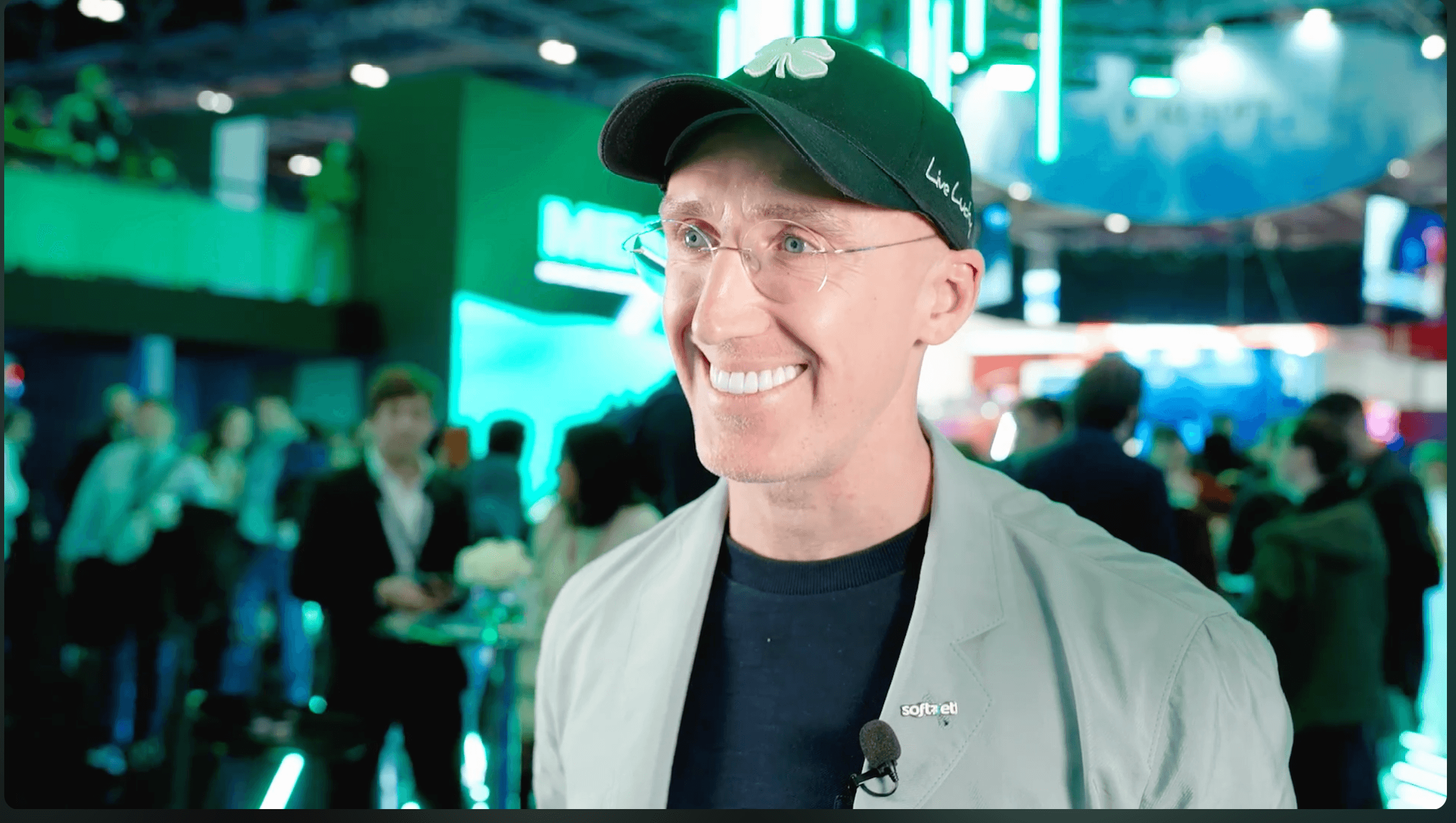
CEO Uri Poliavich founded Soft2bet in 2016. The company now claims to have 10 million users for its software.Source: YouTube
For years, though, Soft2bet and its partners discretely operated other websites through two shell companies: Araxio Development and Rabidi, Investigate Europe has found. Registered in Curaçao, a Caribbean tax haven granting cheap gambling licences, the offshore entities laid the foundations for a highly lucrative business.
Months after Soft2bet launched in 2016, Poliavich set-up Araxio. A few years later Rabidi was formed, this time through a former Soft2bet employee, corporate records show.
These offshore vehicles provided Curaçao licences for dozens of websites, away from the prying eyes of western regulators. Such licences are typically not recognised in Europe, where much stronger player protections exist. Soon, many of the websites were blacklisted by national authorities for targeting European customers illegally.
In parallel, two subsidiaries were established in Cyprus to handle payments on the casinos. The name Soft2bet did not appear anywhere.
Investigate Europe has now obtained thousands of pages of account statements from the two Cypriot entities which show the direct ties between Soft2bet and the network of unlicensed casinos.
The documents reveal that between May 2020 and May 2024 the Cypriot firms – Tranello and Tilaros – channelled €600 million to Soft2bet and its partners.
Months after Soft2bet launched in 2016, Poliavich set-up Araxio. A few years later Rabidi was formed, this time through a former Soft2bet employee, corporate records show.
These offshore vehicles provided Curaçao licences for dozens of websites, away from the prying eyes of western regulators. Such licences are typically not recognised in Europe, where much stronger player protections exist. Soon, many of the websites were blacklisted by national authorities for targeting European customers illegally.
In parallel, two subsidiaries were established in Cyprus to handle payments on the casinos. The name Soft2bet did not appear anywhere.
Investigate Europe has now obtained thousands of pages of account statements from the two Cypriot entities which show the direct ties between Soft2bet and the network of unlicensed casinos.
The documents reveal that between May 2020 and May 2024 the Cypriot firms – Tranello and Tilaros – channelled €600 million to Soft2bet and its partners.
“Soft2bet has all these entities in the group but we are the same team.”
— A former Soft2bet employee
Transfers in the payment statements were often labelled as “marketing services” or “license agreement” with over €330 million going to companies owned by Poliavich. These included Outono, Soft2bet's top holding at the time, and Brainrocket, the group's casino development arm.
Tilaros, although not formally owned by Soft2bet, was used to pay the group’s then chief commercial officer and head of compliance, and its current chief legal counsel.
Millions more were funnelled to marketing and customer service businesses owned by Poliavich’s associates.
Leaked internal files, interviews with former staff and analysis of corporate records suggest that these marketing and customer support companies may operate as part of the group.
“Soft2bet has all these entities in the group but we are the same team,” an ex-employee from the marketing business told Investigate Europe. "Everyone is part of the same Slack [online chat] for internal communications.”
The corporate separation “seems to be decorative”, said Chris Kronow Rasmussen, Adjunct Professor of Investigations at the University of New Haven. “The defining feature of these structures is the braiding of legal and illegal activity,” he claimed.
Tilaros, although not formally owned by Soft2bet, was used to pay the group’s then chief commercial officer and head of compliance, and its current chief legal counsel.
Millions more were funnelled to marketing and customer service businesses owned by Poliavich’s associates.
Leaked internal files, interviews with former staff and analysis of corporate records suggest that these marketing and customer support companies may operate as part of the group.
“Soft2bet has all these entities in the group but we are the same team,” an ex-employee from the marketing business told Investigate Europe. "Everyone is part of the same Slack [online chat] for internal communications.”
The corporate separation “seems to be decorative”, said Chris Kronow Rasmussen, Adjunct Professor of Investigations at the University of New Haven. “The defining feature of these structures is the braiding of legal and illegal activity,” he claimed.
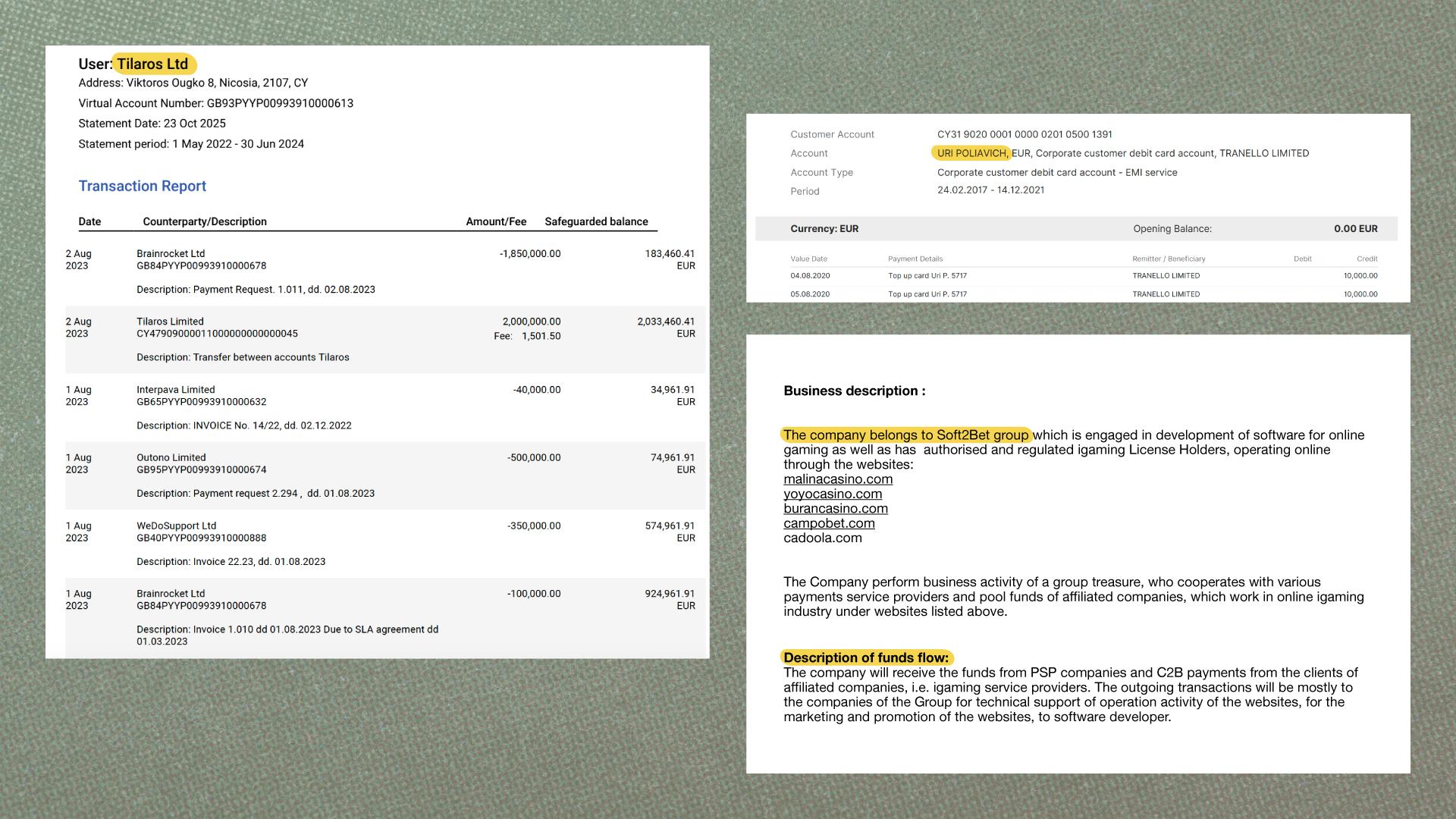
Payment statements from the two Cypriot shell companies showing transfers to companies owned by Soft2bet or its partners.Credit: Joanna Poupaki/Spoovio
Targeting vulnerable gamblers
According to several people who previously worked with Soft2bet, many of the blacklisted casinos operated alongside the company’s 11 licensed brands, but their customer agents used more aggressive marketing tactics.
“It was common practice to reopen the accounts of players who closed them due to addiction, and to start sending them SMS, emails, bonuses so they'd gamble again,” claimed a former marketing employee.
Investigate Europe has seen internal conversations where managers confirmed these practices and said reopening accounts was a commercial decision.
Similarly, players' winnings were delayed so that they would gamble more, claims a former customer service agent, who would call over 200 new players a day from Soft2bet’s Cyprus office.
“I've seen instances where players were like, 'I've been trying to withdraw for two weeks, my rent is due, I can't feed my kid.”
— An ex-marketing employee for Soft2bet
When approached for comment, Soft2bet did not address specific allegations but denied any wrongdoing.
Illegal online gambling generated more than €80 billion in revenue in 2024, representing 71 per cent of the total market across the EU, according to marketplace intelligence firm Yield Sec.
For gamblers like 48-year-old Stefan*, the lack of player protection was life-changing. The Austrian citizen, who runs an air-conditioning business, says he stole from his own firm to fund his gambling habit.
“Nobody asked me if I could afford it or where the money was from, even though I was using my company's bank accounts,” said Stefan, who bankrupted both himself and his business after losing €70,000 on two unlicensed Soft2bet-linked casinos.
“I was gambling eight hours or more until the morning, I wouldn't think about work the next day, the only thing that mattered was rolling the slots,” he said. “Gambling addiction affects your whole life, you become a pathological liar.”
Desperate players like Stefan took Araxio and Rabidi to court, unaware that Soft2bet was in fact connected to them. The two Cypriot subsidiaries were also sued by victims, court documents obtained by Investigate Europe reveal.
Judges in Austria and Germany sided with the plaintiffs and concluded that the casinos were not allowed to target customers in their countries. The four shell companies linked to Soft2bet were declared bankrupt in 2023 and 2024.
Illegal online gambling generated more than €80 billion in revenue in 2024, representing 71 per cent of the total market across the EU, according to marketplace intelligence firm Yield Sec.
For gamblers like 48-year-old Stefan*, the lack of player protection was life-changing. The Austrian citizen, who runs an air-conditioning business, says he stole from his own firm to fund his gambling habit.
“Nobody asked me if I could afford it or where the money was from, even though I was using my company's bank accounts,” said Stefan, who bankrupted both himself and his business after losing €70,000 on two unlicensed Soft2bet-linked casinos.
“I was gambling eight hours or more until the morning, I wouldn't think about work the next day, the only thing that mattered was rolling the slots,” he said. “Gambling addiction affects your whole life, you become a pathological liar.”
Desperate players like Stefan took Araxio and Rabidi to court, unaware that Soft2bet was in fact connected to them. The two Cypriot subsidiaries were also sued by victims, court documents obtained by Investigate Europe reveal.
Judges in Austria and Germany sided with the plaintiffs and concluded that the casinos were not allowed to target customers in their countries. The four shell companies linked to Soft2bet were declared bankrupt in 2023 and 2024.
Blacklisted casinos across Europe
Despite the bankruptcies, Investigate Europe can reveal that Soft2bet and its partners now operate around 160 casinos via new shell companies in jurisdictions like Costa Rica and Anjouan, an island off the coast of East Africa, according to leaked screenshots of internal files.
Exclusive analysis of national databases found that 145 of these are blacklisted in at least one European country. This means they do not have permission to target customers in those markets. Illegally operating without a licence can result in a criminal fine or imprisonment in some European countries.
Reporters were able to verify the leaked list of brands, most of them were uncovered by Investigate Europe last year as being connected to Soft2bet.
The screenshots show the 11 casino brands which Soft2bet says it currently owns, including Betina and Campobet, which feature Atletico Madrid manager Diego Simeone as their ambassador.
The list also includes other casinos that Soft2bet previously acknowledged operating like Wazamba, Rabona and Malina.
Many of these brands appear to still be owned by Soft2bet as they are tagged as “internal” in the leaked screenshots. Others are likely to be operated on behalf of customers that use the company’s software.
“Every couple of weeks they create a new casino," claimed the former marketing employee. “Even if a player thinks they've been scammed and leaves a Soft2bet casino, chances are they'll end up on another Soft2bet website without realising.”

Atlético Madrid manager Diego Simeone is an ambassador for two Soft2bet-owned brands.
Aggressive marketing tactics
Rachel*, a single mother working for the prison service in England, is one of those who have gambled on several Soft2bet-linked casinos. After a period of depression and alcohol abuse, she barred herself from all legal betting sites in the UK in 2020 via the national self-exclusion scheme Gamstop.
In October 2024, while on maternity leave, she struggled with her mental health again and began searching for online casinos. She came across Fat Pirate, a website advertised as a “non-Gamstop" option and listed as an “internal” brand in the leaked list of casinos connected to Soft2bet.
Rachel told Investigate Europe she deposited £11,000 in a single day and quickly reached the highest VIP level, a loyalty programme where high spenders get a personal gambling manager.
“VIP managers would send me emails all the time with rewards and bonuses. If I ran out of money, I could ask them and they'd give me more funds.”
— Rachel, a victim of Soft2bet-linked casinos
Finally after suffering significant financial losses, she stopped using Fat Pirate over Christmas that year, but soon started gambling on another Soft2bet-linked site, unaware they were connected. Over nine months, Rachel lost £145,000 on the two casinos, wiping out her savings, a loan, and her grandmother's inheritance.
She tried to close her Fatpirate account four times without success: “One time they came back and asked what the issue was, I told them and they ignored it. Another time they didn't respond at all,” she claimed. Minutes after speaking to reporters, Rachel received another promotional email from Fat Pirate offering 110 free spins, which she showed to Investigate Europe.
Such aggressive marketing techniques were widespread in the company, former Soft2bet employees allege.
“If a player were to approach me to say that they have gambling problem, I would just tell them to send an email to explain their situation,” the former customer agent said.
“If they still wanted to close their account, I would offer them a bonus. The goal is to try and get them to stay on the platform and not shut down their account. That's something really predatory,” they claimed.
The UK Gambling Commission would not comment on specific cases, but said “tackling unlicensed gambling requires a joined-up approach – between the Commission, other domestic and international regulators, licensed operators, technology platforms, financial sectors and enforcement bodies.”
She tried to close her Fatpirate account four times without success: “One time they came back and asked what the issue was, I told them and they ignored it. Another time they didn't respond at all,” she claimed. Minutes after speaking to reporters, Rachel received another promotional email from Fat Pirate offering 110 free spins, which she showed to Investigate Europe.
Such aggressive marketing techniques were widespread in the company, former Soft2bet employees allege.
“If a player were to approach me to say that they have gambling problem, I would just tell them to send an email to explain their situation,” the former customer agent said.
“If they still wanted to close their account, I would offer them a bonus. The goal is to try and get them to stay on the platform and not shut down their account. That's something really predatory,” they claimed.
The UK Gambling Commission would not comment on specific cases, but said “tackling unlicensed gambling requires a joined-up approach – between the Commission, other domestic and international regulators, licensed operators, technology platforms, financial sectors and enforcement bodies.”
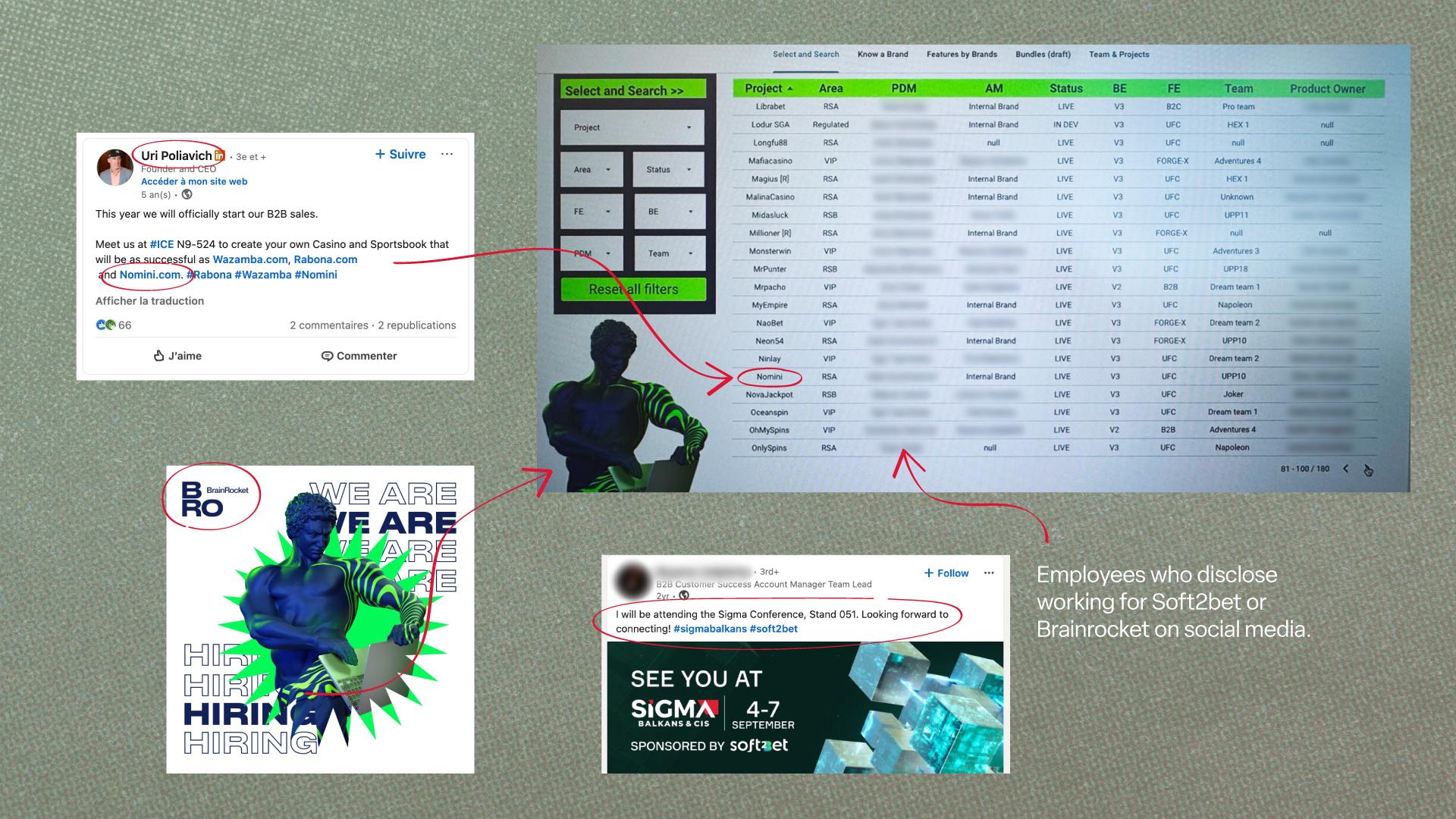
Leaked internal documents show the list of casino brands owned or operated by Soft2bet, and links to Brainrocket, the company's casino development arm.Credit: Joanna Poupaki/Spoovio
From Kyiv to New York
With such a vast network of websites in Soft2bet’s orbit, the company’s 45-year-old founder has become incredibly wealthy. From 2019 to 2024, Soft2bet handed CEO Uri Poliavich nearly €200 million in dividends.
Corporate filings show that he moved to an 18-room mansion near New York and placed part of his fortune in several Bahamian trusts.
As his wealth expanded, Poliavich segued into philanthropy. In 2020, he started the Yael Foundation, an organisation funding religious schools around the world. “It's the Yael Foundation that drives the business, not the business that drives the Yael Foundation,” he said in a self-produced documentary about his life last year.
There is no evidence linking funds from unlicensed gambling activities to the Yael Foundation.
Poliavich grew up between Ukraine and Israel. A lawyer by training, he worked for several gambling companies before founding Soft2bet in 2016 back in Kyiv.
“Poliavich fondly reflects on relocating back to Ukraine,” according to an interview he gave to a gambling magazine. But reality may have been less rosy. In 2020, Ukraine police stormed Soft2bet’s headquarters, as part of a national gambling ban. During the raid, officers found the company was operating 20 casinos with 500,000 players.
Yet the case seems to have gone nowhere since. Due to procedural defects with the warrant, judges ordered seized computers to be returned and Soft2bet left Kyiv for Cyprus.
Poliavich keeps public appearances rare, usually at gambling summits and always wearing a cap adorned with a lucky shamrock, Soft2bet's logo. Previous employees describe a discreet boss who only trusts his inner circle.
“He surrounds himself with people who will only say good things to him, people who will never cross the line,” claimed a website developer who worked at the company.
Former employees claim that in some cases managers asked staff to take a polygraph test. It was also referenced on one of Soft2bet's recruitment pages.
“Management was very paranoid. People said it was a literal police-style interrogation, hooked up to a machine, with questions about personal habits like alcohol or drug use.”
— A former website developer with Soft2bet
Sex-themed casino
Leaked internal conversations from May 2025 show managers at Brainrocket – Soft2bet’s casino development arm – talking about the polygraph tests and also the launch of a new online casino called Onlyspins.
The Onlyspins website is filled with sexualised avatars of women, and allows users to unlock explicit videos featuring a mix of AI-generated and real models.
“It’s two addictions at the same time and it's the easiest way to reach out to the youth,” said the ex-customer agent. Investigate Europe reporters found no age or identity verification were needed for the website.
The former marketing employee claimed that when they worked with Soft2bet: “There were also no age verifications to make sure players were not children. I raised this topic with management several times, but they just don't care.”
Onlyspins appears to hold no gambling licence in Europe. Yet the sex-themed casino received more than one million visits from EU countries between February and April 2026, according to website traffic data.
When trying to deposit funds on Onlyspins via bank transfer from Germany, Investigate Europe was directed to an account at Trumia, an electronic payment firm owned by Poliavich himself. Regulated by Malta's financial authorities, Trumia is registered at Soft2bet's Malta office and its director is the group’s chief financial officer.
When paying by card, reporters in Belgium were asked to send money to Zentoria, a company registered in Ireland. Zentoria holds an Irish gambling licence, but not for Onlyspins. Its licence covers another casino, which is inactive but shares the same IP address as dozens of websites linked to Soft2bet.
The Gambling Regulatory Authority of Ireland said it cannot comment on individual operators but was “cognisant of the risk of black market operators and is committed to addressing them in a robust and proportionate manner.”
Malta’s financial regulator also declined to comment on specific cases and said it was committed to safeguarding the integrity of the country’s financial services.
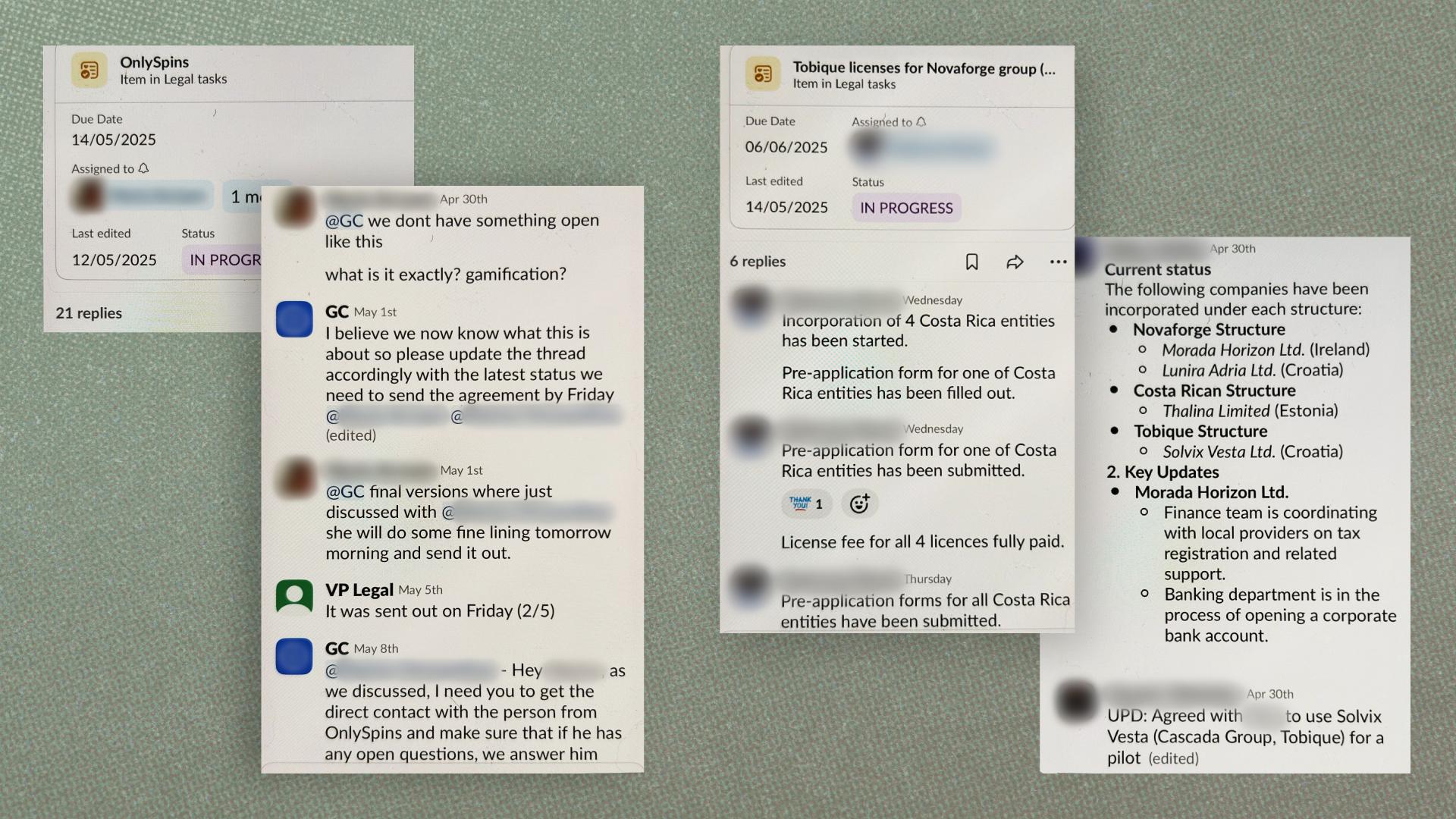
Internal messages shared with Investigate Europe show staff discussing the launch of Onlyspins, and offshore licenses seemingly being issued for other websites.Credit: Joanna Poupaki/Spoovio
Regulators playing catch-up
European regulators have so far failed to clamp down on blacklisted casinos linked to Soft2bet. The EU has no common legislation on gambling, leaving member states to regulate the sector independently.
“The European Commission must finally use its enforcement powers to compel platforms to remove advertisements for illegal online gambling,” said German MEP Sabine Verheyen. “Member States must cooperate more closely to detect and prevent such cross-border practices.”
In Italy and Greece, Soft2bet recently obtained a licence to operate one brand legally, even though well over 100 other websites connected to the company feature on regulators’ blacklists.
Brainrocket relocated parts of its staff from Cyprus to Valencia and the group is gearing up to launch its Betinia brand in Spain under a local gambling licence. This is despite the fact that other casinos linked to Soft2bet have been fined €15m for illegal gambling by Spanish authorities.
Questioned about Diego Simeone’s partnership with Betinia and Campobet, a representative for the Atlético Madrid manager said he is “committed to respecting the law and has only authorised the use of his image in countries where the company holds the necessary license.”
In Canada, Soft2bet operates Tooniebet, a licensed brand in Ontario. After reporters found the company to be linked to several unlicensed websites in the country, the Alcohol and Gaming Commission of Ontario said it would investigate the findings.
“We take the matters raised very seriously… [and] are reviewing the issues and allegations identified in the reporting,” a spokesperson said.
While authorities try to catch-up, Soft2bet’s public ascent shows no signs of slowing down. In 2024, the group inaugurated new offices in Malta and threw anniversary parties in Dubai and Budapest.
“You're dealing with a company that can shut down and reopen entities all around the world at such a pace that by the time regulators open an investigation, Soft2bet would be three steps ahead,” the former website developer claimed.
------
*Names changed to protect individual identities.
Editors: Chris Matthews, Mei-Ling McNamara
This story is part of the Soft2bet Files, a follow-up investigation to a series launched by Investigate Europe in March 2025 into the gambling industry. Media partners for this project include Bayerischer Rundfunk, Ciren, France 2, Franceinfo.fr, Il Fatto Quotidiano, The Irish Times, Partizan, Profil, Publico.es, Publico.pt, Reporters United, Le Soir, Shomrim, Svenska Dagbladet, Times of Malta and The Toronto Star.
Maxence Peigne was awarded the Tenacious Journalist Award in the UK for his work on the gambling industry and this story is partly supported by the initiative.